|
Evidence
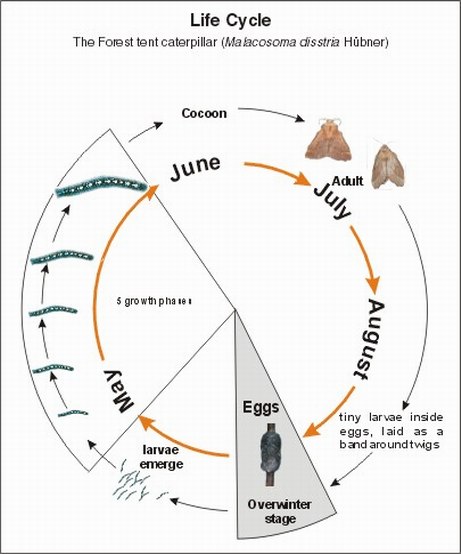
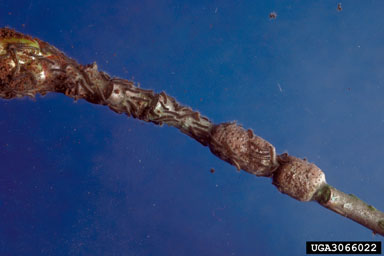
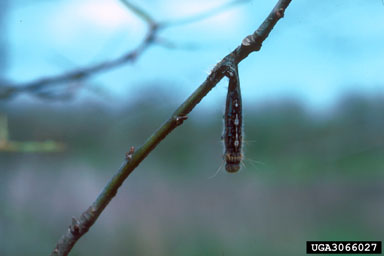
The forest tent caterpillar may be found throughout North America. It is usually present in harwood or mixedwood stands. The appearance of the caterpillar is unique. The larvae, which emerge in the spring, have keyhole shaped patterns on the center of their backs. Light blue stripes follow the length of the sides of their bodies. These characteristics are apparent in each of the 5 larval intars. The adult stage serves only for reproductive purposes. The FTC undergoes a metamorphosis during the pupal stage of its life cycle. The adults have a wingspan of 1-11/2 inches in length. Their bodies are light brown in colour. Egg masses are easily identified by their unique cluster pattern and characteristics. The egg masses contain approximately 150-200 eggs/mass depending on fecundity and the geographic location in which they are found.
|
|
Host Range
There are several tree species that might be damaged or affected by the FTC. The distribution of the FTC covers most of North America. Its presence can be detected in all of the canadian provinces and throughout most of the United States. The caterpillar also causes damage to forested areas in Mexico. The main food source for the FTC is foliage from hardwood tree species. Primary host selection may differ among regions, depending on availability of food. If aspen is present within the forest composition, then it will most likely be chosen for consumption. The leaves of other hardwoods can also be of edible choice. Among these are Carolinian shrub and tree species, oaks, birchs, basswood and small understory shrubs and plants. A severe outbreak in an unhealthy, low stocked stand of trees may result in a complete defoliation of the host trees.
Pest Control
Methods of Control
There are a several options available for the conrtol of the forest tent caterpillar. The method of control will depend on several factors. Scale of the operation must be taken into account. If your concern is ammended to a small parcel of land, then precautionary measures such as cutting twigs and branches in the fall might be the best fit method. If you own a larger parcel of land, this type of method might seem unreasonable. Manual iterative work can be tedious and time consuming. Forestry companies with large land bases would lean toward using manufactured biological control agents. Microbial insectides offer efficient short-term solutions to the problem. There are different types of product that can be purchased or manufactured. The most common types used for large scale applications are: B.t., Nuclear Polyhedrosis Virus', Protozoans, and Nematodes. Each have their own purpose and use. Their effects differ from one another in terms of attack and release. Under extreme outbreak conditions, the government may intervene using natural enemies such as the "friendly fly" to suppress the pest.
B.t. var. kurstaki
|
|